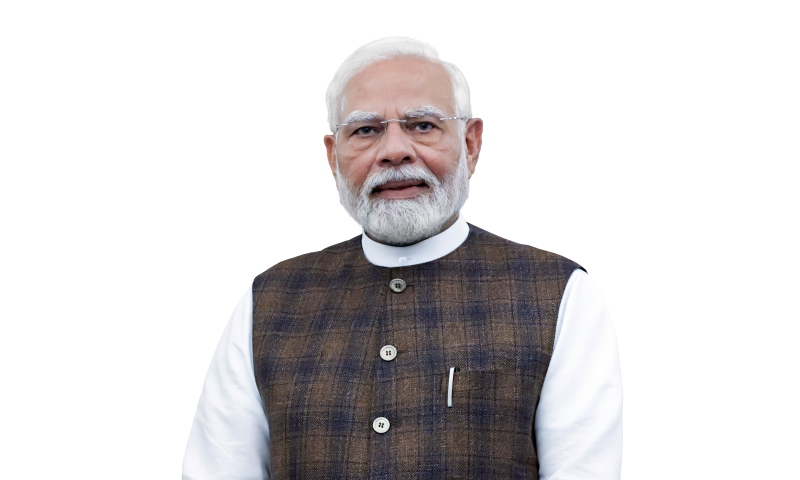
Narendra Modi
Common ground
What both sides accept, and the questions they actually split on.
Where they agree
- Modi has been Prime Minister since 2014 and his government has pursued major economic reforms, including the Goods and Services Tax (GST).
- Digital India is a significant initiative of his government.
- His policies have encouraged foreign investment and tied India more closely to the global economy.
- The effects of his policies are uneven, with some groups benefiting more than others.
Where they part ways
-
Does Modi's governance centralize power or empower local bodies?
MainstreamThe mainstream view describes him as a strong, decisive leader who consolidates political stability through electoral dominance.
AlternativeThe decentralization view holds that, despite top-down rhetoric, his programs and 'Minimum Government, Maximum Governance' approach aim to give local bodies more authority and reduce bureaucratic overreach.
-
Whose interests do Modi's economic reforms mainly serve?
MainstreamThe mainstream view presents the reforms as modernization that drives GDP growth and investment, with some critics noting uneven impact.
AlternativeThe most common alternative view says the reforms mainly benefit large conglomerates and global corporations at the expense of small farmers, workers and the environment.
-
How should his cultural and religious policies be understood?
MainstreamThe mainstream view treats policies like the revocation of Article 370 and the CAA as controversial, raising concerns about religious polarization, minority rights and free expression.
AlternativeThe cultural renaissance view sees his promotion of yoga, festivals and traditional knowledge as restoring national pride and an inclusive Indian identity that counters communal division.
-
Is Modi driven by ideology or by pragmatism?
MainstreamThe mainstream view calls him a transformative and polarizing figure whose leadership is entangled with debates over social cohesion and civil liberties.
AlternativeThe technocrat view holds that he is guided by data, metrics and results, and is willing to reverse course, rather than being bound by rigid ideology.
Your verdict
Your badge
Read both sides to the end and earn a badge to share. Most people never open the other one.
- Mainstream
- Alternative
References
- Rudolph, L. I., & Rudolph, S. H. (2015). Narendra Modi and India’s Political Economy. Asian Survey, 55(2), 273-296.
- The World Bank. (2020). India’s Economic Growth and Reforms.
- Jaffrelot, C. (2019). Modi’s India: Hindu Nationalism and the Rise of Ethnic Democracy. C. Hurst & Co.
- The Economist. (2023). Narendra Modi’s record: India’s leader has changed his country—mostly for the better.
- Freedom House. (2023). Freedom in the World 2023: India.
- Official site
- Narendra Modi - Wikipedia
Want to take notes?
Sign in or create an account to download your results as a PDF, save your searches, take personal notes directly on viewpoints, follow topics to hear when they change, and track your learning journey.
Comments
No comments yet. Be the first to comment!